-
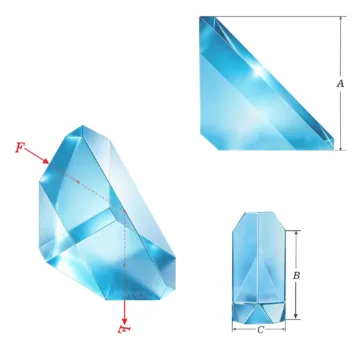
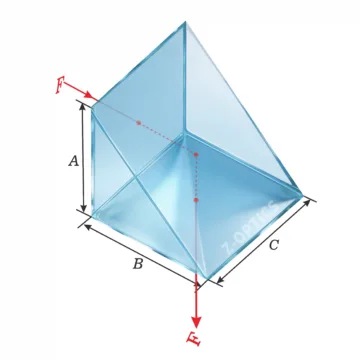
An optical H-K9L roof prism features a precise 90° roof angle configuration to achieve exact 90-degree beam deviation with image inversion. This precision design utilizes two orthogonal reflecting faces to flip images laterally around the roof axis, ensuring critical orientation alignment in compact optical systems. Engineered with a λ/10 surface figure and ±3 arcsecond angle tolerance, these components deliver distortion-free performance across aperture diameters ranging from 9mm to 29mm.
-
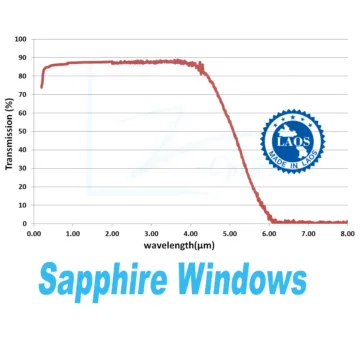
The mechanical properties of Sapphire include its great strength, thermal stability, wear resistance, and chemical inertness. As a result, a Sapphire Window outperforms other optical materials in severe conditions, acting as a shield between the elements. In optical and mechanical applications, sapphire windows are often used. Features
- Chemical resistance due to its high surface hardness.
- Transmits light at wavelengths ranging from ultraviolet to near-infrared.
- Thinner and stronger than standard glass windows.
- Available with anti-reflection coatings ranging from 400 to 5000nm
-
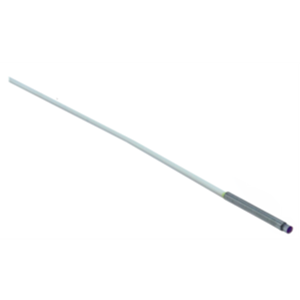
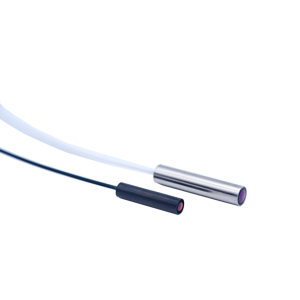
Short Work Distance Pigtailed Fiber Collimators can focus light into a very small spot(several microns to dozens of microns diameter), which is important for some applications like topography, ranging.
-
At Z-Optics, our SHORTPASS FILTERS are precision-engineered optical filters designed to transmit wavelengths shorter than a specified cut-off point while effectively blocking longer wavelengths. These filters provide excellent optical density (OD) and broad operational wavelength ranges, making them indispensable components in diverse optical and photonics systems requiring sharp spectral cutoff.
-
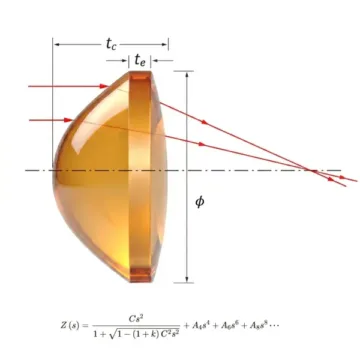
A Zinc Selenide (ZnSe) Aspheric Lens features a specialized surface profile designed to eliminate spherical aberration and minimize optical distortions like astigmatism, providing superior focus and clarity in infrared systems compared to standard spherical lenses. Main Applications of Our ZnSe Aspherical Lens:
- CO2 Laser Collimation: Functions as a high-efficiency collimator or condenser for high-power infrared light sources.
- Laser Beam Shaping: Serves as a precision collimator for high-power industrial and medical laser systems.
- Fiber Optic Coupling: Acts as a high-performance coupling lens to efficiently focus infrared laser beams into optical fibers.
- Infrared Thermal Imaging: Enhances resolution and image quality in thermal imaging cameras and FLIR systems operating in the MWIR and LWIR spectrums.
-
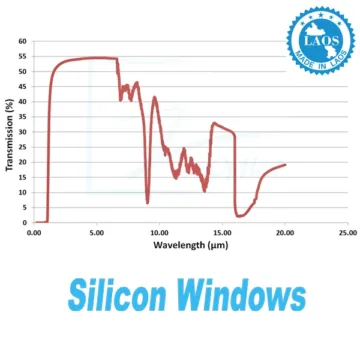
Silicon Windows are suitable for infrared applications due to their high transmittance between 1.2 and 7.0 μm. Silicon has a low density of 2.329 g/cm3, making it an excellent material for weight-sensitive applications. Features -
- Transmission range of 1.2 - 7μm.
- Available Uncoated or AR Coated for 3 - 5μm.
- Ideal for applications requiring low weight.
-
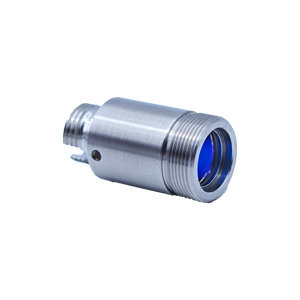
Single Mode Achromatic Fiber Collimators is used for wide band application. Chromatic aberration is elaborately compensated with special design on materials, curves, thickness and separation of lenses. Please use right connectors and fibers listed in tables.
-
Single mode pigtailed fiber collimators are used to transform the laser emitted from fiber into a parallel Gaussian beam by finely positioning the lens to fiber or couple the parallel Gaussian beam into fiber in inverse. It can be used in reflective type and thrubeam type. Normally, a sphere lens or GRIN lens is used in collimator to transform light. It can be divided into specified working distance collimators and wide working distance range collimators.
-
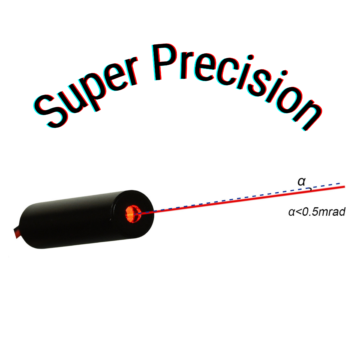
The small off-boresight angle laser modules are precisely aligned and adjusted for high accuracy alignment tasks. It ranks from low cost +/-100mm to high precision <+/-3mm deviation from the mechanical axis of the housing after beam travels 20m distance. Wavelength can be from UV to 1610nm. LDM series is for laser module with a power input from an adapter or power supply and LDP series for a laser pointer with battery inside. Model: LDMXXX-A-B-C-G-1-AX * XXX – Wavelength(nm) A – power(mW), B – diameter(mm), C – length(mm) Features:
- Off-Boresight angle: <+/-0.75mrad.
- Free of adjustment after fixing the laser module.
- Auto power control (APC) driver. Laser output power keeps steady.
- Full Spectrum: 405nm~1610nm.
-
The small off-boresight angle laser modules are precisely aligned and adjusted for high accuracy alignment tasks. It ranks from low cost +/-100mm to high precision <+/-3mm deviation from the mechanical axis of the housing after beam travels 20m distance. Wavelength can be from UV to 1610nm. LDM series is for laser module with a power input from an adapter or power supply and LDP series for a laser pointer with battery inside. Model: LDPXXX-A-B-C * XXX – Wavelength(nm) A – power(mW), B – diameter(mm), C – length(mm) Features:
- Off-Boresight angle: <+/-0.2mrad.
- Free of adjustment after fixing laser module
- Auto power control (APC) driver. Laser output power keeps steady
- Power adjustable
- Powered by a rechargeable Lithium battery
- Full spectrum: 405nm~1610nm.
-