-
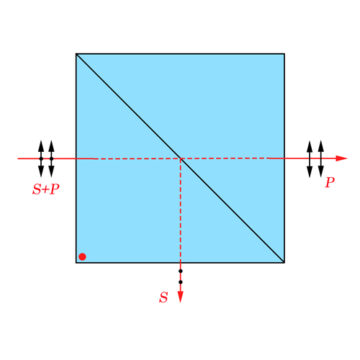
Beamsplitters are used for separating or merging light beams. The two common forms Z-OPTICS LIMITED offers are Plates and cubes. Cubes are a simple, safe shape for applications with low power rates. The efficiency of beamsplitters depends largely on the parameters for the coating. The type, coating, transmission range and damage threshold should be taken into consideration when choosing beamsplitters.
-
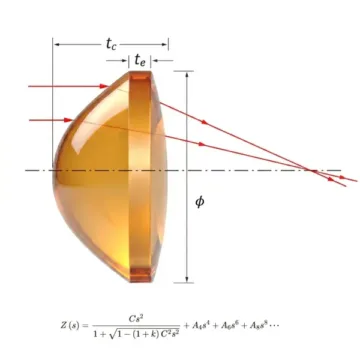
A Zinc Selenide (ZnSe) Aspheric Lens features a specialized surface profile designed to eliminate spherical aberration and minimize optical distortions like astigmatism, providing superior focus and clarity in infrared systems compared to standard spherical lenses. Main Applications of Our ZnSe Aspherical Lens:
- CO2 Laser Collimation: Functions as a high-efficiency collimator or condenser for high-power infrared light sources.
- Laser Beam Shaping: Serves as a precision collimator for high-power industrial and medical laser systems.
- Fiber Optic Coupling: Acts as a high-performance coupling lens to efficiently focus infrared laser beams into optical fibers.
- Infrared Thermal Imaging: Enhances resolution and image quality in thermal imaging cameras and FLIR systems operating in the MWIR and LWIR spectrums.
-
A Zinc Selenide (ZnSe) Aspheric Lens features a specialized surface profile designed to eliminate spherical aberration and minimize optical distortions like astigmatism, providing superior focus and clarity in infrared systems compared to standard spherical lenses. Main Applications of Our ZnSe Aspherical Lens:
- CO2 Laser Collimation: Functions as a high-efficiency collimator or condenser for high-power infrared light sources.
- Laser Beam Shaping: Serves as a precision collimator for high-power industrial and medical laser systems.
- Fiber Optic Coupling: Acts as a high-performance coupling lens to efficiently focus infrared laser beams into optical fibers.
- Infrared Thermal Imaging: Enhances resolution and image quality in thermal imaging cameras and FLIR systems operating in the MWIR and LWIR spectrums.
-
A Zinc Selenide (ZnSe) Aspheric Lens features a specialized surface profile designed to eliminate spherical aberration and minimize optical distortions like astigmatism, providing superior focus and clarity in infrared systems compared to standard spherical lenses. Main Applications of Our ZnSe Aspherical Lens:
- CO2 Laser Collimation: Functions as a high-efficiency collimator or condenser for high-power infrared light sources.
- Laser Beam Shaping: Serves as a precision collimator for high-power industrial and medical laser systems.
- Fiber Optic Coupling: Acts as a high-performance coupling lens to efficiently focus infrared laser beams into optical fibers.
- Infrared Thermal Imaging: Enhances resolution and image quality in thermal imaging cameras and FLIR systems operating in the MWIR and LWIR spectrums.
-
A Zinc Selenide (ZnSe) Aspheric Lens features a specialized surface profile designed to eliminate spherical aberration and minimize optical distortions like astigmatism, providing superior focus and clarity in infrared systems compared to standard spherical lenses. Main Applications of Our ZnSe Aspherical Lens:
- CO2 Laser Collimation: Functions as a high-efficiency collimator or condenser for high-power infrared light sources.
- Laser Beam Shaping: Serves as a precision collimator for high-power industrial and medical laser systems.
- Fiber Optic Coupling: Acts as a high-performance coupling lens to efficiently focus infrared laser beams into optical fibers.
- Infrared Thermal Imaging: Enhances resolution and image quality in thermal imaging cameras and FLIR systems operating in the MWIR and LWIR spectrums.
-
A Zinc Selenide (ZnSe) Aspheric Lens features a specialized surface profile designed to eliminate spherical aberration and minimize optical distortions like astigmatism, providing superior focus and clarity in infrared systems compared to standard spherical lenses. Main Applications of Our ZnSe Aspherical Lens:
- CO2 Laser Collimation: Functions as a high-efficiency collimator or condenser for high-power infrared light sources.
- Laser Beam Shaping: Serves as a precision collimator for high-power industrial and medical laser systems.
- Fiber Optic Coupling: Acts as a high-performance coupling lens to efficiently focus infrared laser beams into optical fibers.
- Infrared Thermal Imaging: Enhances resolution and image quality in thermal imaging cameras and FLIR systems operating in the MWIR and LWIR spectrums.
-
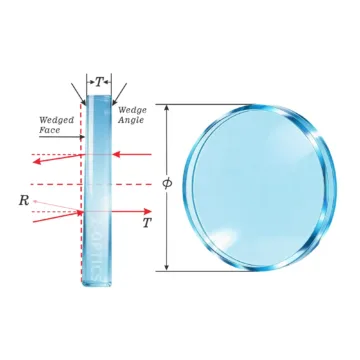
The Caf2 (Calcium Fluoride) Wedge Beamsplitter is a cutting-edge optical component that has garnered significant attention across various scientific, industrial, and laser-based applications. This is meticulously designed to bifurcate incoming light into two separate beams, each with a predetermined ratio of reflected and transmitted light, making it an indispensable tool for precision light management within optical systems.
-
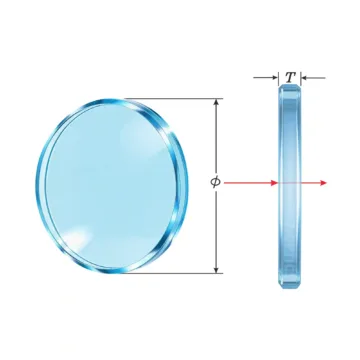
Calcium Fluoride (CaF2) Windows have a high damage threshold and low absorption and are transparent from 180 nm to 8µm. It is a great choice for FTIR analysis, excimer laser systems, spectroscopic windows, and thermal imaging systems. Features:
- <1 arc-minute parallelism
- Ideally suited for excimer laser applications.
- Transparent in UV, visible, and infrared light.
- A low absorption rate and a high damage threshold
- In comparison to other IR materials, it has a low chromatic aberration.
-
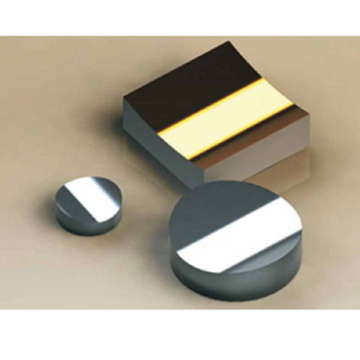
Concave Sphere Mirror and Concave Cylindrical Mirror, are optical components that showcase precision engineering. These mirrors exemplify Z-optics' commitment to delivering superior optical solutions. The Concave Sphere Mirror boasts a precisely curved surface designed to converge incident light, making it ideal for applications requiring focused reflection, such as in telescopes or imaging systems. Z-optics' advanced manufacturing processes ensure the curvature meets exact specifications, providing consistent and reliable optical performance.
-
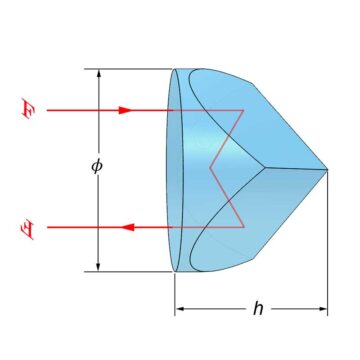
Z-optics is a leading manufacturer of Corner Cube Retroreflectors for a wide range of applications. We are proud to be a biggest manufacturer of Corner Cube Retroreflectors worldwide, producing nearly half a million pieces each year. Our dedication to providing high-quality retroreflectors ensures that our customers receive the precision and reliability they need for their specific applications.

-
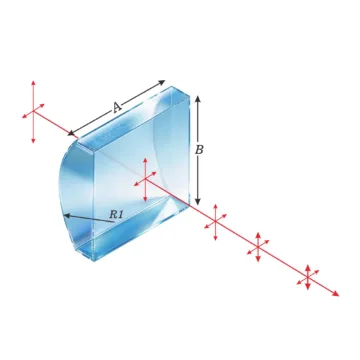
- Z-OPTICS has big catalog of cylindrical lens off-the-shelf for quick delivery and provides quick sampling service for new drawings.
- Multiplicity of materials, Glass, Fused Silica, Sapphire, CaF2, ZnSe ….
- Innovative low cost plano convex cylindrical lens is available.
Overview
- Ready Stock: Z-Optics offers a large catalog of cylindrical lenses available for fast delivery and custom sampling for your unique designs.
- Material Multiplicity: Select from premium optical glass, fused silica, sapphire, CaF2, ZnSe, and more—a solution for every requirement.
- Cost-Effective Options: Innovative low-cost plano convex cylindrical lenses and specialized shapes for demanding optical applications.
-
Dichroic Filter from Z-Optics is a precision optical component designed to selectively transmit and reflect specific wavelengths of light, enhancing color separation and spectral control in various high-performance optical systems. These filters operate using thin-film interference technology and are typically set at a 45° angle of incidence, reflecting undesired wavelengths while transmitting the targeted light spectrum with high efficiency and durability....