-
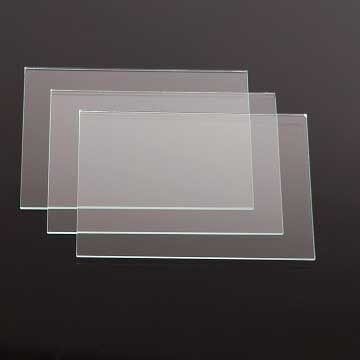
AG glass Windows is used on-screen to reduce sunlight/light reflection. The surface is etched by chemical to specified gloss, roughness and haze. A finished window might need post-treatment such as silk-screen printing, 3M double sides adhesive, heat tempered, coating. Please contact us for more information, supports or free samples.
-
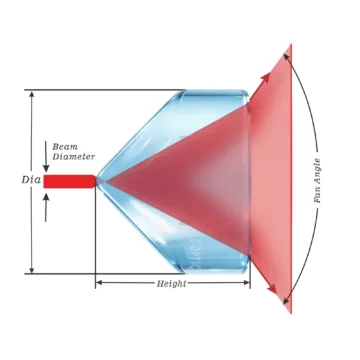
Powell Lenses narrow are specially engineered optical components that excel in transforming laser beams into a uniform, straight-line intensity distribution. These lenses are meticulously crafted to overcome the limitations of traditional beam-shaping technologies, offering a breakthrough in laser beam homogenization. They deliver an exceptionally uniform beam profile, eliminating hotspots and irregularities for enhanced laser performance and efficiency. With a focus on efficiency, Powell Lenses minimize energy loss, maximizing output power for cost-effective solutions.
-
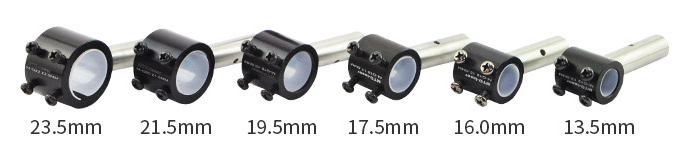
Our laser modules can be conveniently mounted on our laser brackets. There are several different designs to better fit our customers' applications. We can also provide special design if you can't find proper one here for you. All brackets use the same tubes series with different diameter. Here we list the most widely used sizes. The tube can be customized too.
-
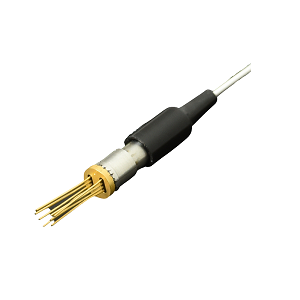
Z-Optics provides a full line of laser diodes from 405nm to 1625nm. All the products are qualified and operate reliably. Most products are on the shelf for quick delivery. Products listed in the table are not always updated on time. So just please tell us the wavelength, power, and package if not listed here, we will check our stock for you.
-
-
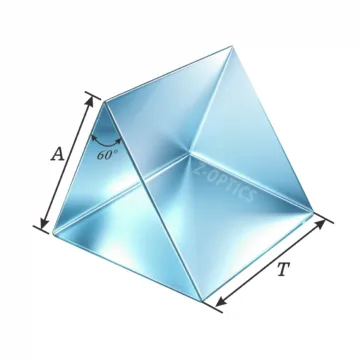
Our high-precision Equilateral Prisms (also known as dispersing prisms) feature three equal 60° angles, making them ideal for high-performance wavelength separation and beam refraction applications. Engineered for tight optical setups, these prisms deliver minimal distortion and excellent light dispersion across the visible spectrum.
-
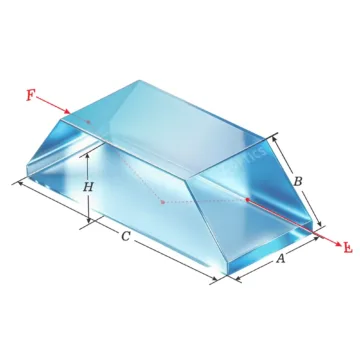
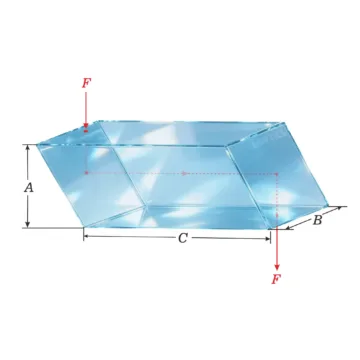
Our precision Rhomboid Prisms feature a parallelogram geometry designed to alter an optical path without changing beam direction. These high-quality optical prisms are engineered to displace a laser beam laterally while maintaining its original alignment. Ideal for precision imaging systems, they shift the optical axis without inverting or reverting the image. Tight angular tolerances guarantee that the output beam remains perfectly parallel to the input beam within 30 arcseconds. Key Features:
- High-precision lateral beam displacement.
- Parallel input/output alignment within 30 arcseconds.
- Shifts the optical axis without image inversion.
- Optimized for demanding beam steering and displacement applications.
-
-
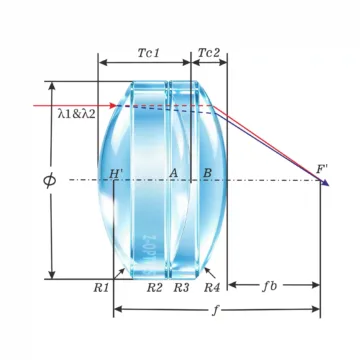
An achromatic lens is a type of lens that is designed to reduce chromatic aberration, which is the tendency of a lens to produce different colors of light in focus at different points. This is accomplished by combining two or more glass elements with different refractive indices. The most common type of achromatic lens is the doublet, which is made up of two elements, one concave and one convex. Achromatic lenses are commonly used in photography, telescope, microscope, and other imaging systems. They are also used in eyeglasses, binoculars and other optical instruments.
-
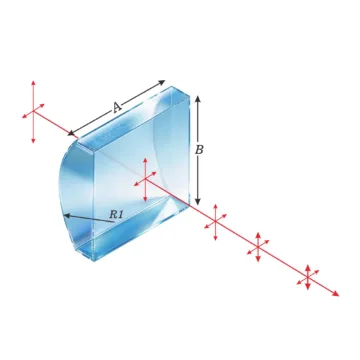
- Z-OPTICS has big catalog of cylindrical lens off-the-shelf for quick delivery and provides quick sampling service for new drawings.
- Multiplicity of materials, Glass, Fused Silica, Sapphire, CaF2, ZnSe ….
- Innovative low cost plano convex cylindrical lens is available.
Overview
- Ready Stock: Z-Optics offers a large catalog of cylindrical lenses available for fast delivery and custom sampling for your unique designs.
- Material Multiplicity: Select from premium optical glass, fused silica, sapphire, CaF2, ZnSe, and more—a solution for every requirement.
- Cost-Effective Options: Innovative low-cost plano convex cylindrical lenses and specialized shapes for demanding optical applications.
-
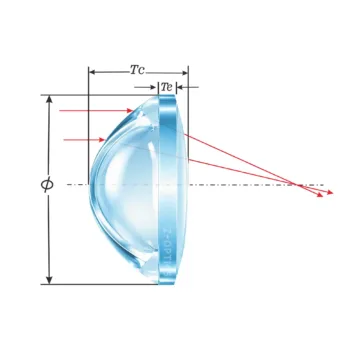
An Aspheric Lens is one whose surface profiles do not resemble those of a sphere or cylinder. In comparison to a basic lens, Aspherical Lens can reduce or eliminate spherical aberration and also other optical distortions such as astigmatism. Main Applications of Our Aspherical Lens: - Collimator or condenser of the light source. - Collimator of laser. - Coupling lens to focus laser into an optical fiber. - Imaging
-
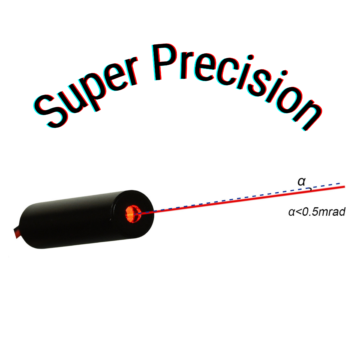
The small off-boresight angle laser modules are precisely aligned and adjusted for high accuracy alignment tasks. It ranks from low cost +/-100mm to high precision <+/-3mm deviation from the mechanical axis of the housing after beam travels 20m distance. Wavelength can be from UV to 1610nm. LDM series is for laser module with a power input from an adapter or power supply and LDP series for a laser pointer with battery inside. Model: LDMXXX-A-B-C-G-1-AX * XXX – Wavelength(nm) A – power(mW), B – diameter(mm), C – length(mm) Features:
- Off-Boresight angle: <+/-0.75mrad.
- Free of adjustment after fixing the laser module.
- Auto power control (APC) driver. Laser output power keeps steady.
- Full Spectrum: 405nm~1610nm.