Call Us Today! +86-577-8181-0885|sales@z-optics.com

Shop

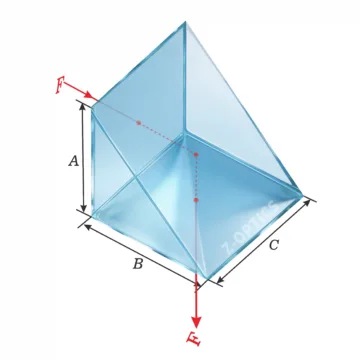
  • The right-angle prism has a basic 45-degree right triangle geometry and is one of the most commonly used prisms for redirecting light and rotating images. It can be used to deviate a light path by 90° or 180°, depending on which surface is used as the input for the light source.
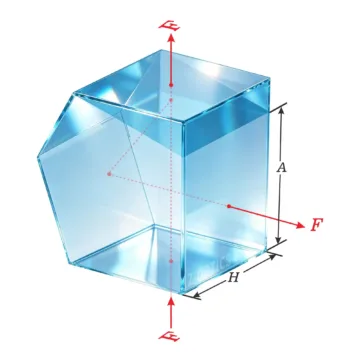
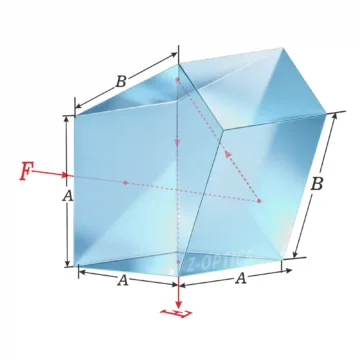
  • Z-optics is a leading manufacturer of Corner Cube Retroreflectors for a wide range of applications. We are proud to be a biggest manufacturer of Corner Cube Retroreflectors worldwide, producing nearly half a million pieces each year. Our dedication to providing high-quality retroreflectors ensures that our customers receive the precision and reliability they need for their specific applications.
    One of our unique offerings is our n=2 corner cube retroreflectors. These retroreflectors are specially designed to operate in water without coating. This makes them perfect for use in marine or underwater environments, where traditional retroreflectors would require a coating to function properly. The n=2 corner cube retroreflectors are a cost-effective solution for underwater surveying, positioning, and geodesy applications. Our retroreflectors are made from precision-machined glass and feature three mutually perpendicular, flat mirrors that reflect light back along its original path. This design allows for efficient retroreflection of light, making our retroreflectors ideal for use in electronic distance measurement (EDM) instruments and satellite-based positioning systems. We offer a wide range of sizes and designs to suit different applications. Our Corner Cube Retroreflectors are available in standard and custom sizes, as well as with or without coatings. We also offer Corner Cube Retroreflectors with different wavelength ranges to suit different laser sources. At Z-optics, we pride ourselves on our commitment to quality and customer satisfaction. All of our Corner Cube Retroreflectors are manufactured to the highest standards and are backed by a comprehensive warranty.
  • Z-Optics provides visible and infrared laser modules with circular, elliptic, linear, and cross-hair beam profiles in a variety of packages and configurations at very competitive prices. Our engineers have optics, crystal and laser background, years experience in laser module design and production, which make us competitive in integrating the optics, electrics and laser together according to the requirements of customers. We promise one week delivery time for samples and 1-2 weeks for mass order. Our Capability: Super Linearity and Flatness - A line laser module is developed, with only <2mm height difference over 1x1m2 flat surface, visible or infrared wavelength.Super Small Laser Module - A 650nm laser module is developed, with only 3.3mm diameter.Super directivity - the beam spot lies on the centre line of the laser module by fine design and adjustment.A 532nm laser module is under developing, which has the widest operation temperature window, -10~+50 Celsius degree. The most power-saving 532nm laser module is under developing *More dimensions, package, power level and high-quality products please download our catalogue

  • Powell Lenses narrow are specially engineered optical components that excel in transforming laser beams into a uniform, straight-line intensity distribution. These lenses are meticulously crafted to overcome the limitations of traditional beam-shaping technologies, offering a breakthrough in laser beam homogenization. They deliver an exceptionally uniform beam profile, eliminating hotspots and irregularities for enhanced laser performance and efficiency. With a focus on efficiency, Powell Lenses minimize energy loss, maximizing output power for cost-effective solutions.
    From industrial manufacturing to medical imaging, Powell Lenses adapt to diverse applications, empowering industries to achieve new heights. At Z-Optics, we provide customized  Powell Lenses, offering different aperture sizes, focal lengths, and beam-shaping profiles to meet your unique needs.
    • Generates a uniform laser line
    • Fan angle from 1° up to 90°
    • One dimensional Line straightness
    • Customized lenses, diameter, and height can be manufactured upon request of the customer
  • A special type of thick biconvex optical lens is a Ball lenses that usually has a sphere geometric shape. These are made of a single material such as BK7 or other optical glass/Fused Silica/CaF2 which is a commonly used material for ball lenses. The smallest lens we produced is < 0.5 mm. We can process ball lenses using all types of glass material. Our price for PV industry may be as low as USD0.02/pcs. We are developing CSD-based AR-coating to provide a low-cost PV-coating solution.
  • The hemispheres of the Half-ball lens have uniform light dispersion and are commonly used in high power LED and UV LED, focusing and coupling light. It has many advantages over silicone lens and plastic lens. Our half-ball lenses are made from BK7, B270, Fused Silica, Sapphire, and more. We can also deliver custom Half-Ball lenses and alternative materials in a range of diameters.
    • Why you should choose Z-Optics
    Cost-Effective: Offers low-cost, high-volume production with a yield of up to 1,000,000 pieces per month, ensuring an unbeatable price. • Material Versatility: From glass to crystal, such as BK7, B270, Borosilicate glass, UV Fused Silica, Sapphire, and ZnSe. • Customization: Allows for free choice of refractive index and lens height (0~full diameter), catering to specific needs. • Quick Delivery: Maintains a large off-the-shelf catalogue for rapid delivery and offers low-cost sampling for customized lenses. • Innovative Technology: Boasts unique technology, ensuring high production efficiency. • Trusted by Industry Leaders: Has served or is serving leading companies such as Cree, Luminus, Osram, and Samsung.
    • Z-OPTICS has big catalog of cylindrical lens off-the-shelf for quick delivery and provides quick sampling service for new drawings.
    • Multiplicity of materials, Glass, Fused Silica, Sapphire, CaF2, ZnSe ….
    • Innovative low cost plano convex cylindrical lens is available.

    Overview

    • Ready Stock: Z-Optics offers a large catalog of cylindrical lenses available for fast delivery and custom sampling for your unique designs.
    • Material Multiplicity: Select from premium optical glass, fused silica, sapphire, CaF2, ZnSe, and more—a solution for every requirement.
    • Cost-Effective Options: Innovative low-cost plano convex cylindrical lenses and specialized shapes for demanding optical applications.

    What Is a Cylindrical Lens?

    A cylindrical lens focuses light into a straight line. Its surface is shaped from a cylinder, compressing images perpendicular to the axis and maintaining clarity parallel to it. These lenses are critical for correcting astigmatism, as well as precision tasks in spectroscopy, laser scanning, image projection, and advanced imaging systems. Explore a comprehensive description on Wikipedia - Cylindrical Lens for scientific insight.

    Product Features & Benefits

    • Wide range of sizes and focal lengths for scientific, industrial, and laser applications
    • Custom manufacturing to meet your specifications—reach out via the Contact Page for tailored solutions
    • Rigorous optical and quality inspections for every lens—learn more about our standards in our Lens Catalog (PDF)

    Technical Specifications

    • Materials: Fused Silica, Optical Glass, Sapphire, Calcium Fluoride (CaF2), Zinc Selenide (ZnSe)
    • Available Types: Plano-convex, plano-concave, custom geometries
    • Finish: Precision polished for low scatter and high optical clarity
    • Coatings: Broadband AR, laser-line AR, and custom options
    • Tolerances: Customizable to demanding research and OEM requirements

    Applications

    • Laser Scanning and Beam Shaping
    • Optical Communication Systems
    • Spectroscopy & Analytical Instruments
    • Imaging, Microscopy, and Machine Vision
    • Astigmatism Correction in Ophthalmology (AAO Resource)

    Ordering & Support

    For technical support or to discuss your requirements, visit our main optics page or refer to our full cylindrical lens portfolio.
  • An achromatic lens is a type of lens that is designed to reduce chromatic aberration, which is the tendency of a lens to produce different colors of light in focus at different points. This is accomplished by combining two or more glass elements with different refractive indices. The most common type of achromatic lens is the doublet, which is made up of two elements, one concave and one convex. Achromatic lenses are commonly used in photography, telescope, microscope, and other imaging systems. They are also used in eyeglasses, binoculars and other optical instruments.
    Achromatic lenses are designed to correct for chromatic aberrations by combining two or more glass elements with different refractive indices. The most common type of achromatic lens is a doublet, which consists of one concave element and one convex element. The concave element is made of a low-dispersion glass, while the convex element is made of a higher-dispersion glass. When light passes through these two elements, the different dispersion properties of the glasses cause the different colors of light to come into focus at different distances. This is known as chromatic aberration. By carefully designing the curvatures of the elements and the spacing between them, the lens designer can create a lens that brings all colors of light into focus at the same distance, effectively eliminating chromatic aberration. Achromatic lenses are used in a wide range of applications where sharp and accurate imaging is critical, such as in photography, telescope, microscope, and other imaging systems. They are also used in eyeglasses, binoculars, and other optical instruments. Achromatic lenses are also commonly used in scientific research, for example in telescopes for studying stars, in microscopes for studying cells, in imaging systems for studying materials, and in other areas where precise imaging is necessary. In addition to the doublet lens there are also other types of achromatic lenses available, such as the achromatic triplet lens and the apochromatic lens. These lenses are designed to correct for chromatic aberrations even more effectively than the doublet lens, by using additional elements or specialized glasses. They are generally more expensive than doublet lenses but can offer even better image quality.
  • Meniscus lens is a lens that has two curved spherical surfaces, one convex and the other concave. Around the middle, the meniscus lens is thicker than at the sides. Thus, with a rising beam waist and spherical aberration, the lens has a smaller beam diameter. When a meniscus lens is paired with another lens it shortens the focal length and increases the system's numerical aperture. This decreases the distortion of the image and increases the resolution of the image.
  • A Double Concave Lenses is nothing more than a biconcave lens with concave surfaces on both sides. Double-Concave Lenses are designed for applications such as beam expansion, image reduction, and light projection. Additionally, these lenses are excellent for increasing the focal length of an optical system.
  • Plano-Concave Lenses are spherical negative lenses with one concave surface and one smooth surface. These lenses bend parallel light rays to the opposite side of the lens and thus have a negative focal length. Such lenses can be used to diverge light or to increase an optical system's focal length.
  • Double convex lenses have positive focal length and form both actual and virtual images, they have shorter focal lengths. Z-Optics offers a wide range of Double-Convex lenses to maximize performance..
Go to Top