-
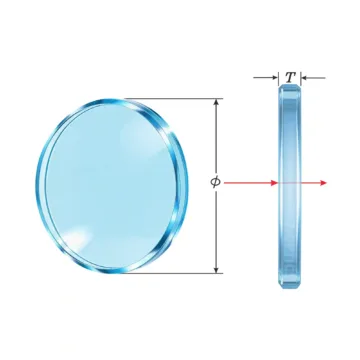
At Z-Optics, our SHORTPASS FILTERS are precision-engineered optical filters designed to transmit wavelengths shorter than a specified cut-off point while effectively blocking longer wavelengths. These filters provide excellent optical density (OD) and broad operational wavelength ranges, making them indispensable components in diverse optical and photonics systems requiring sharp spectral cutoff.
-
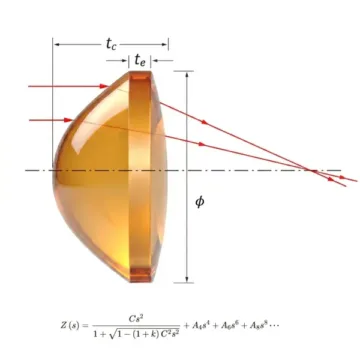
A Zinc Selenide (ZnSe) Aspheric Lens features a specialized surface profile designed to eliminate spherical aberration and minimize optical distortions like astigmatism, providing superior focus and clarity in infrared systems compared to standard spherical lenses. Main Applications of Our ZnSe Aspherical Lens:
- CO2 Laser Collimation: Functions as a high-efficiency collimator or condenser for high-power infrared light sources.
- Laser Beam Shaping: Serves as a precision collimator for high-power industrial and medical laser systems.
- Fiber Optic Coupling: Acts as a high-performance coupling lens to efficiently focus infrared laser beams into optical fibers.
- Infrared Thermal Imaging: Enhances resolution and image quality in thermal imaging cameras and FLIR systems operating in the MWIR and LWIR spectrums.
-
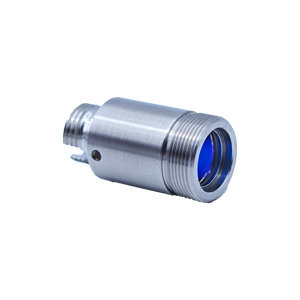
Single Mode Achromatic Fiber Collimators is used for wide band application. Chromatic aberration is elaborately compensated with special design on materials, curves, thickness and separation of lenses. Please use right connectors and fibers listed in tables.
-
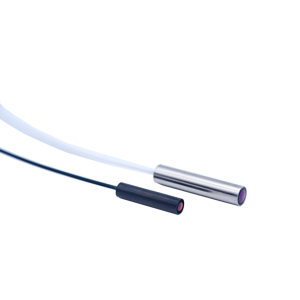
Single mode pigtailed fiber collimators are used to transform the laser emitted from fiber into a parallel Gaussian beam by finely positioning the lens to fiber or couple the parallel Gaussian beam into fiber in inverse. It can be used in reflective type and thrubeam type. Normally, a sphere lens or GRIN lens is used in collimator to transform light. It can be divided into specified working distance collimators and wide working distance range collimators.
-
Ultra long work distance fiber collimators have over 2km work distance by expanding laser beam from fiber to dozens of millimeters, even over 100mm beam diameter. It's used in telemetry, illumination, lidar and so on, which project laser to remote distance. Multi-groups air-spaced lenses are used to optimize the power distribution. The beam spot is homogeneous and has clear board line.
-
A Zinc Selenide (ZnSe) Aspheric Lens features a specialized surface profile designed to eliminate spherical aberration and minimize optical distortions like astigmatism, providing superior focus and clarity in infrared systems compared to standard spherical lenses. Main Applications of Our ZnSe Aspherical Lens:
-
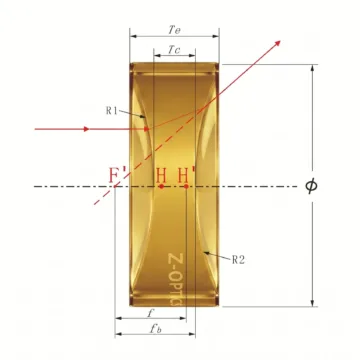
A Zinc Selenide (ZnSe) Double Concave Lens features two symmetrical inner-curved surfaces designed to diverge incident infrared light, increase focal lengths, and expand laser beams with exceptional wavefront clarity. Engineered from premium CVD laser-grade Zinc Selenide and optimized for a 10.6 µm design wavelength, these negative lenses come standard with our high-efficiency IR2 broadband anti-reflection (BBAR) coating, yielding an average reflectance (R_avg) of less than 1.5% across the 8–12 µm long-wave infrared (LWIR) spectrum.
-
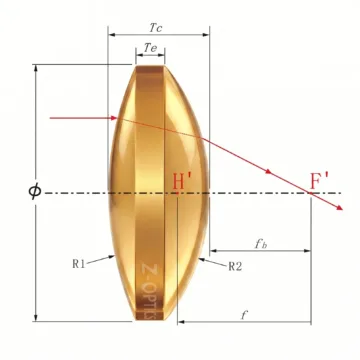
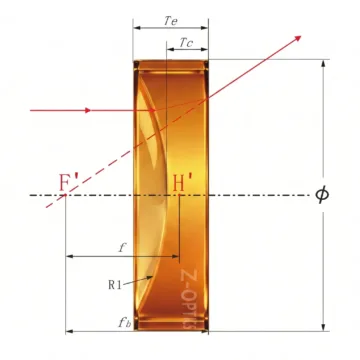
A Zinc Selenide (ZnSe) Double Convex Lens features two symmetrical, outward-curved surfaces engineered to converge incident infrared light, reduce focal lengths, and focus high-power laser beams with exceptional wavefront clarity. Fabricated from premium CVD laser-grade material and optimized for a 10.6 µm design wavelength, these bi-convex positive lenses deliver low bulk absorption and high transmission across the infrared spectrum.
-
A Zinc Selenide (ZnSe) Plano-Concave Lens features one flat and one inward-curved surface engineered to diverge incident infrared light, extend focal lengths, and expand high-power laser beams with exceptional wavefront clarity. Fabricated from premium CVD laser-grade substrate material and optimized for a 10.6 µm design wavelength, these negative lenses deliver low bulk absorption and high transmission across the infrared spectrum. Available in both uncoated configurations and high-efficiency IR2 anti-reflection coatings (Ravg < 1.5% @ 8–12 µm), our lenses are precision-manufactured with a strict surface quality of 60-40 and an EFL tolerance of ±1%.
-
A Zinc Selenide (ZnSe) Aspheric Lens features a specialized surface profile designed to eliminate spherical aberration and minimize optical distortions like astigmatism, providing superior focus and clarity in infrared systems compared to standard spherical lenses. Main Applications of Our ZnSe Aspherical Lens:
- CO2 Laser Collimation: Functions as a high-efficiency collimator or condenser for high-power infrared light sources.
- Laser Beam Shaping: Serves as a precision collimator for high-power industrial and medical laser systems.
- Fiber Optic Coupling: Acts as a high-performance coupling lens to efficiently focus infrared laser beams into optical fibers.
- Infrared Thermal Imaging: Enhances resolution and image quality in thermal imaging cameras and FLIR systems operating in the MWIR and LWIR spectrums.
-
A Zinc Selenide (ZnSe) Aspheric Lens features a specialized surface profile designed to eliminate spherical aberration and minimize optical distortions like astigmatism, providing superior focus and clarity in infrared systems compared to standard spherical lenses. Main Applications of Our ZnSe Aspherical Lens:
- CO2 Laser Collimation: Functions as a high-efficiency collimator or condenser for high-power infrared light sources.
- Laser Beam Shaping: Serves as a precision collimator for high-power industrial and medical laser systems.
- Fiber Optic Coupling: Acts as a high-performance coupling lens to efficiently focus infrared laser beams into optical fibers.
- Infrared Thermal Imaging: Enhances resolution and image quality in thermal imaging cameras and FLIR systems operating in the MWIR and LWIR spectrums.