Call Us Today! +86-577-8181-0885|sales@z-optics.com

Shop

  • A Germanium Window is an optical window that is opaque to UV and visible light but transmits a wide range of infrared radiation. Because of its low dispersion, it exhibits little chromatic aberration. Germanium is also a material commonly for IR windows and lenses in thermal imaging systems. Features -
    • Excellent for near-infrared and imaging applications.
    • Anti-reflection coating with a wavelength range of 8 to 12 µm.
    • This Window is ideal for low-power CO2 laser applications.
  • Silicon Windows are suitable for infrared applications due to their high transmittance between 1.2 and 7.0 μm. Silicon has a low density of 2.329 g/cm3, making it an excellent material for weight-sensitive applications. Features -
    • Transmission range of 1.2 - 7μm.
    • Available Uncoated or AR Coated for 3 - 5μm.
    • Ideal for applications requiring low weight.
  • Zinc Sulphide (ZnS) windows have a high transmission range of 8-14 microns in the infrared (IR). It offers a wide transmission range for visible and mid-wave or long-wave infrared sensors, making it the ideal material for thermal imaging. Features
    • Zinc Sulfide Substrate Multispectral Grade
    • Low Absorption and Scatter from 0.4 to 12m
    • Available uncoated or with an 8 to 12μm Broadband AR Coated Option
  • A ZnSe window is a transparent, very stable optical window made of Zinc Selenide. These windows offer strong resistance to thermal shock and exceptionally low IR absorption. Their transmission range is between 0.5 μm and 22 μm. Features
    • Available Uncoated or AR Coated
    • Low dispersion and low absorption coefficient
    • Extremely low IR absorption
    • 3 to 12 µm broadband IR anti-reflection coating
    • Highly resistant to thermal shock
  • The mechanical properties of Sapphire include its great strength, thermal stability, wear resistance, and chemical inertness. As a result, a Sapphire Window outperforms other optical materials in severe conditions, acting as a shield between the elements. In optical and mechanical applications, sapphire windows are often used. Features
    • Chemical resistance due to its high surface hardness.
    • Transmits light at wavelengths ranging from ultraviolet to near-infrared.
    • Thinner and stronger than standard glass windows.
    • Available with anti-reflection coatings ranging from 400 to 5000nm
  • Fused Silica Windows are an excellent choice for high-precision, clear transmittance applications. They have low bulk scatter and autofluorescence, as well as incredibly high surface quality and parallelism. Many sectors use fused silica windows, including aircraft, astronomy, military and commercial avionics, medical and scientific instruments, academics and research, and industrial uses. They're an excellent choice for laser applications, spectroscopy, photolithography, vacuum windows, and a variety of other uses.  Discover premium Fused Silica Windows from z optics . 0.1 angstrom roughness can be achieved with super polishing.
  • High-transmittance optical K9 glass windows are ideal for optical laboratory equipment. optical windows are transparent, flat, plane-parallel optical windows meant to shield sensors and other electronic devices from environmental conditions. Considerations for Optical Window material selection include transmission qualities, scattering, strength, and resistance to specific conditions. Their use should have no effect on a system's magnification. Optical Windows may be optically polished and include a light-diffusing device to regulate illumination.To achieve the best transmission performance for a specific wavelength, AR coatings can be applied. A variety of materials, including quartz, IR crystals, UV fused silica, and optical glasses, are utilised to make the windows. Our optical windows have x-ray protection, UV light resistance, and far-infrared light transmission capabilities, among other qualities. Typically, optical windows are made of two flat, or Plano, polished surfaces that are optically transparent and meant to segregate, seal, or otherwise protect other components. The double-sided manufacturing technique produces superior parallelism and transmitted wavefront, making it perfect for visible windows in industrial and biomedical applications, as well as infrared windows in military/defense applications. When the original is in two physical settings, an optical window can protect it. And there is essentially little influence on visible light. Coating the surface of windows could increase transmittance; typically used coatings include antireflection coating (AR) and scratch-resistant coating (AS). Optical glass flat with coating can improve light penetration strength while also being waterproof, dustproof, and scratch-proof. Our k9 Windows are utilised by scientific and industrial companies in the medical, defence, instrumentation, laser, research, and imaging fields. Z-Optics provides a wide range of windows in a variety of materials and designs. Special size and material optical windows are also available upon request. Furthermore, we offer single layer or multilayer anti-reflective coating on optical windows. Our optical windows' general parameters are listed in the catalogue below, and you are invited to customise the windows with your own designs or drawings.
  •     D263T eco is a clear borosilicate glass that has high chemical resistance. It is available in a variety of thicknesses ranging from 0.05 mm to 1.1 mm. Applications include use as cover glass, display glass, as coating or printed electronics substrate and as a replacement for plastic. In consumer electronics like LED chips, customers need ultra-low-cost windows in very big volumes. Normally Scott D263T is used as substrate. It's coated and diced to the desired size by blade or laser. Z-Optics deposits film on a big sheet of D263T and cut into the desired size upon requests of the customer by laser. Laser cutting possesses advantages of flexibility on shape, high precision and low cost. Read more..
    Introducing the Ultra Low Cost Windows from Z-optics, a pioneering optical component that redefines accessibility without compromising quality. Z-optics, a leader in optical innovation, has engineered these windows to provide an affordable yet high-performance solution for a wide range of applications. Designed with precision and efficiency in mind, the Ultra Low Cost Window by Z-optics offers a cost-effective alternative without sacrificing optical excellence. These windows are crafted with cutting-edge materials and manufacturing processes to ensure durability and longevity, making them an ideal choice for various industries seeking budget-friendly optical solutions. Z-optics' commitment to quality shines through in the Ultra Low Cost Window. Each component undergoes rigorous testing to meet the company's stringent standards. The result is an optical product that not only meets but exceeds expectations, delivering clarity and performance that rivals more expensive alternatives on the market. Versatility is a key feature of the Ultra Low Cost Window, making it suitable for diverse applications. From industrial settings to consumer electronics, these windows seamlessly integrate into different environments, providing cost-effective optical solutions for a broad spectrum of users. Z-optics understands the importance of accessibility in the modern world, and the Ultra Low Cost Windows reflect this ethos. By offering a product that combines affordability with cutting-edge technology, Z-optics aims to democratize access to high-quality optics, empowering businesses and individuals alike. In addition to their cost-effectiveness, these windows adhere to Z-optics' commitment to environmental responsibility. The manufacturing processes prioritize eco-friendly materials, reinforcing the company's dedication to sustainability. In conclusion, Z-optics' Low Cost Windows stand as a testament to the company's innovation and dedication to accessibility. By providing a high-quality optical component at an affordable price point, Z-optics continues to lead the way in making advanced optical technology accessible to a broader audience. Choose Ultra Low Cost Windows for unparalleled value without compromise in optical performance. Download Datasheet
  • AG glass Windows is used on-screen to reduce sunlight/light reflection. The surface is etched by chemical to specified gloss, roughness and haze. A finished window might need post-treatment such as silk-screen printing, 3M double sides adhesive, heat tempered, coating. Please contact us for more information, supports or free samples.
  • An Aspheric Lens is one whose surface profiles do not resemble those of a sphere or cylinder. In comparison to a basic lens, Aspherical Lens can reduce or eliminate spherical aberration and also other optical distortions such as astigmatism. Main Applications of Our Aspherical Lens: - Collimator or condenser of the light source. - Collimator of laser. - Coupling lens to focus laser into an optical fiber. - Imaging
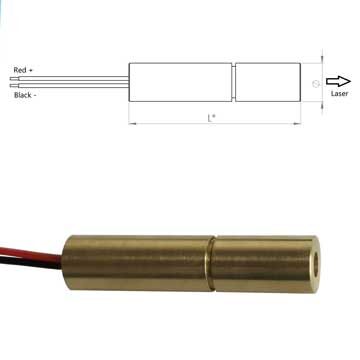
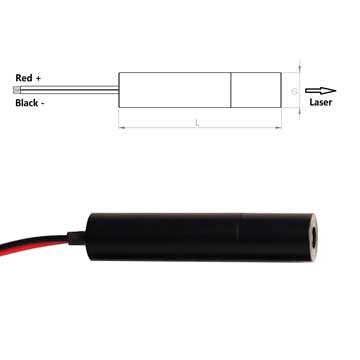
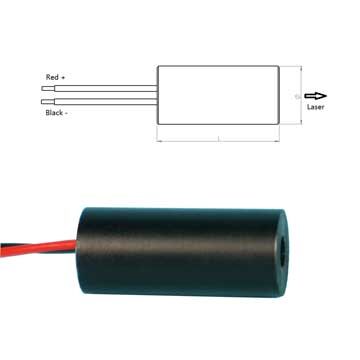
  • Z-Optics provides a full line of laser diodes from 405nm to 1625nm. All the products are qualified and operate reliably. Most products are on the shelf for quick delivery. Products listed in the table are not always updated on time. So just please tell us the wavelength, power, and package if not listed here, we will check our stock for you.
  • Our laser modules can be conveniently mounted on our laser brackets. There are several different designs to better fit our customers' applications. We can also provide special design if you can't find proper one here for you. All brackets use the same tubes series with different diameter. Here we list the most widely used sizes. The tube can be customized too.
Go to Top