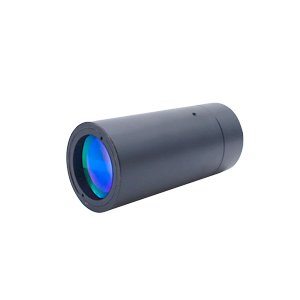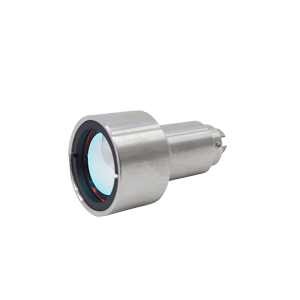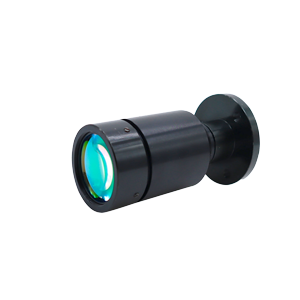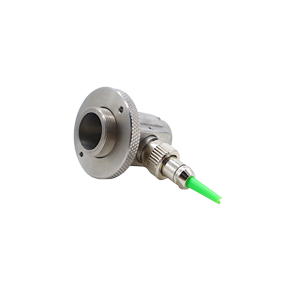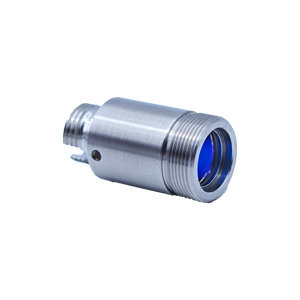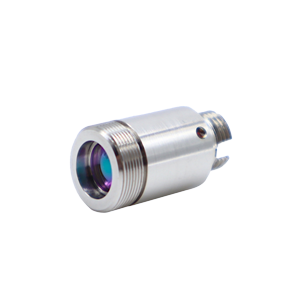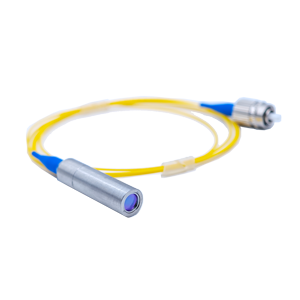
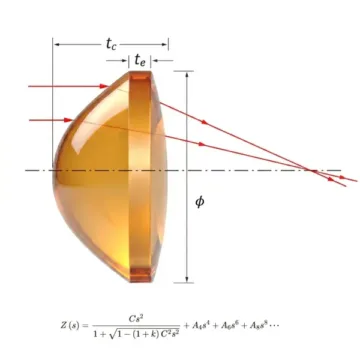
- CO2 Laser Collimation: Functions as a high-efficiency collimator or condenser for high-power infrared light sources.
- Laser Beam Shaping: Serves as a precision collimator for high-power industrial and medical laser systems.
- Fiber Optic Coupling: Acts as a high-performance coupling lens to efficiently focus infrared laser beams into optical fibers.
- Infrared Thermal Imaging: Enhances resolution and image quality in thermal imaging cameras and FLIR systems operating in the MWIR and LWIR spectrums.
-
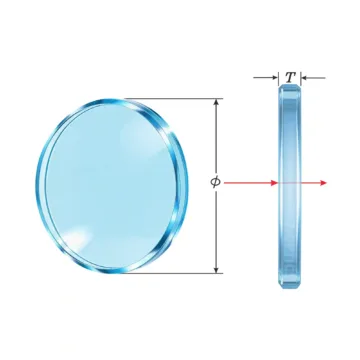
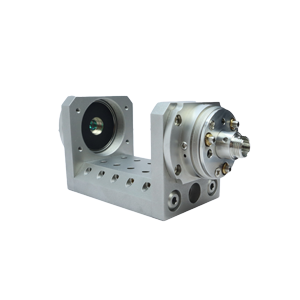
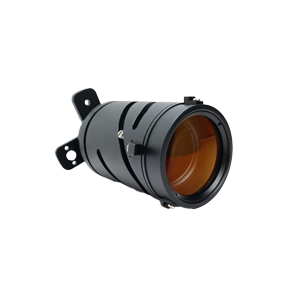
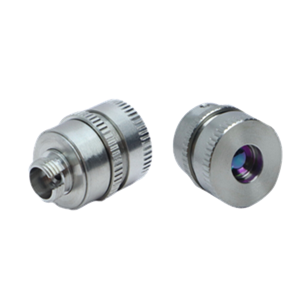
A Zinc Selenide (ZnSe) Aspheric Lens features a specialized surface profile designed to eliminate spherical aberration and minimize optical distortions like astigmatism, providing superior focus and clarity in infrared systems compared to standard spherical lenses. Main Applications of Our ZnSe Aspherical Lens:
-
A Zinc Selenide (ZnSe) Aspheric Lens features a specialized surface profile designed to eliminate spherical aberration and minimize optical distortions like astigmatism, providing superior focus and clarity in infrared systems compared to standard spherical lenses. Main Applications of Our ZnSe Aspherical Lens:
- CO2 Laser Collimation: Functions as a high-efficiency collimator or condenser for high-power infrared light sources.
- Laser Beam Shaping: Serves as a precision collimator for high-power industrial and medical laser systems.
- Fiber Optic Coupling: Acts as a high-performance coupling lens to efficiently focus infrared laser beams into optical fibers.
- Infrared Thermal Imaging: Enhances resolution and image quality in thermal imaging cameras and FLIR systems operating in the MWIR and LWIR spectrums.
-
A Zinc Selenide (ZnSe) Aspheric Lens features a specialized surface profile designed to eliminate spherical aberration and minimize optical distortions like astigmatism, providing superior focus and clarity in infrared systems compared to standard spherical lenses. Main Applications of Our ZnSe Aspherical Lens:
- CO2 Laser Collimation: Functions as a high-efficiency collimator or condenser for high-power infrared light sources.
- Laser Beam Shaping: Serves as a precision collimator for high-power industrial and medical laser systems.
- Fiber Optic Coupling: Acts as a high-performance coupling lens to efficiently focus infrared laser beams into optical fibers.
- Infrared Thermal Imaging: Enhances resolution and image quality in thermal imaging cameras and FLIR systems operating in the MWIR and LWIR spectrums.
-
A Zinc Selenide (ZnSe) Aspheric Lens features a specialized surface profile designed to eliminate spherical aberration and minimize optical distortions like astigmatism, providing superior focus and clarity in infrared systems compared to standard spherical lenses. Main Applications of Our ZnSe Aspherical Lens:
- CO2 Laser Collimation: Functions as a high-efficiency collimator or condenser for high-power infrared light sources.
- Laser Beam Shaping: Serves as a precision collimator for high-power industrial and medical laser systems.
- Fiber Optic Coupling: Acts as a high-performance coupling lens to efficiently focus infrared laser beams into optical fibers.
- Infrared Thermal Imaging: Enhances resolution and image quality in thermal imaging cameras and FLIR systems operating in the MWIR and LWIR spectrums.
-
A Zinc Selenide (ZnSe) Aspheric Lens features a specialized surface profile designed to eliminate spherical aberration and minimize optical distortions like astigmatism, providing superior focus and clarity in infrared systems compared to standard spherical lenses. Main Applications of Our ZnSe Aspherical Lens:
- CO2 Laser Collimation: Functions as a high-efficiency collimator or condenser for high-power infrared light sources.
- Laser Beam Shaping: Serves as a precision collimator for high-power industrial and medical laser systems.
- Fiber Optic Coupling: Acts as a high-performance coupling lens to efficiently focus infrared laser beams into optical fibers.
- Infrared Thermal Imaging: Enhances resolution and image quality in thermal imaging cameras and FLIR systems operating in the MWIR and LWIR spectrums.
-
A Zinc Selenide (ZnSe) Aspheric Lens features a specialized surface profile designed to eliminate spherical aberration and minimize optical distortions like astigmatism, providing superior focus and clarity in infrared systems compared to standard spherical lenses. Main Applications of Our ZnSe Aspherical Lens:
- CO2 Laser Collimation: Functions as a high-efficiency collimator or condenser for high-power infrared light sources.
- Laser Beam Shaping: Serves as a precision collimator for high-power industrial and medical laser systems.
- Fiber Optic Coupling: Acts as a high-performance coupling lens to efficiently focus infrared laser beams into optical fibers.
- Infrared Thermal Imaging: Enhances resolution and image quality in thermal imaging cameras and FLIR systems operating in the MWIR and LWIR spectrums.
-
A Zinc Selenide (ZnSe) Aspheric Lens features a specialized surface profile designed to eliminate spherical aberration and minimize optical distortions like astigmatism, providing superior focus and clarity in infrared systems compared to standard spherical lenses. Main Applications of Our ZnSe Aspherical Lens:
- CO2 Laser Collimation: Functions as a high-efficiency collimator or condenser for high-power infrared light sources.
- Laser Beam Shaping: Serves as a precision collimator for high-power industrial and medical laser systems.
- Fiber Optic Coupling: Acts as a high-performance coupling lens to efficiently focus infrared laser beams into optical fibers.
- Infrared Thermal Imaging: Enhances resolution and image quality in thermal imaging cameras and FLIR systems operating in the MWIR and LWIR spectrums.
-
A Zinc Selenide (ZnSe) Aspheric Lens features a specialized surface profile designed to eliminate spherical aberration and minimize optical distortions like astigmatism, providing superior focus and clarity in infrared systems compared to standard spherical lenses. Main Applications of Our ZnSe Aspherical Lens:
- CO2 Laser Collimation: Functions as a high-efficiency collimator or condenser for high-power infrared light sources.
- Laser Beam Shaping: Serves as a precision collimator for high-power industrial and medical laser systems.
- Fiber Optic Coupling: Acts as a high-performance coupling lens to efficiently focus infrared laser beams into optical fibers.
- Infrared Thermal Imaging: Enhances resolution and image quality in thermal imaging cameras and FLIR systems operating in the MWIR and LWIR spectrums.
-
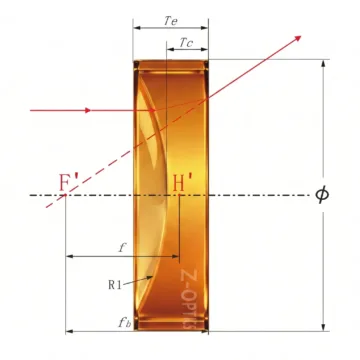
A Zinc Selenide (ZnSe) Plano-Concave Lens features one flat and one inward-curved surface engineered to diverge incident infrared light, extend focal lengths, and expand high-power laser beams with exceptional wavefront clarity. Fabricated from premium CVD laser-grade substrate material and optimized for a 10.6 µm design wavelength, these negative lenses deliver low bulk absorption and high transmission across the infrared spectrum. Available in both uncoated configurations and high-efficiency IR2 anti-reflection coatings (Ravg < 1.5% @ 8–12 µm), our lenses are precision-manufactured with a strict surface quality of 60-40 and an EFL tolerance of ±1%.
-
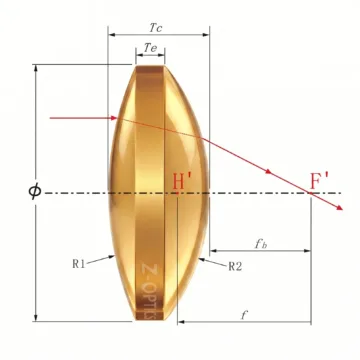
A Zinc Selenide (ZnSe) Double Convex Lens features two symmetrical, outward-curved surfaces engineered to converge incident infrared light, reduce focal lengths, and focus high-power laser beams with exceptional wavefront clarity. Fabricated from premium CVD laser-grade material and optimized for a 10.6 µm design wavelength, these bi-convex positive lenses deliver low bulk absorption and high transmission across the infrared spectrum.
-
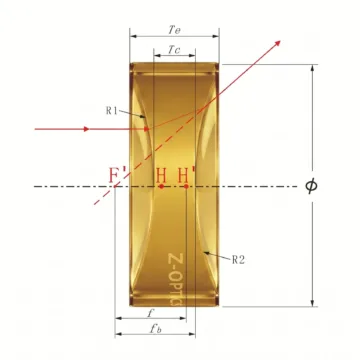
A Zinc Selenide (ZnSe) Double Concave Lens features two symmetrical inner-curved surfaces designed to diverge incident infrared light, increase focal lengths, and expand laser beams with exceptional wavefront clarity. Engineered from premium CVD laser-grade Zinc Selenide and optimized for a 10.6 µm design wavelength, these negative lenses come standard with our high-efficiency IR2 broadband anti-reflection (BBAR) coating, yielding an average reflectance (R_avg) of less than 1.5% across the 8–12 µm long-wave infrared (LWIR) spectrum.
-
A Zinc Selenide (ZnSe) Aspheric Lens features a specialized surface profile designed to eliminate spherical aberration and minimize optical distortions like astigmatism, providing superior focus and clarity in infrared systems compared to standard spherical lenses. Main Applications of Our ZnSe Aspherical Lens:
-
Discover Z-Optics Notch Filters, precision-engineered optical components designed to selectively block specific wavelengths with high accuracy while maintaining excellent transmission outside the blocked band. Our notch filters are ideal for advanced optical systems requiring precise wavelength control, such as laser protection, fluorescence microscopy, Raman spectroscopy, and telecommunications.
-
Dichroic Filter from Z-Optics is a precision optical component designed to selectively transmit and reflect specific wavelengths of light, enhancing color separation and spectral control in various high-performance optical systems. These filters operate using thin-film interference technology and are typically set at a 45° angle of incidence, reflecting undesired wavelengths while transmitting the targeted light spectrum with high efficiency and durability....
-
High-Performance Optical Components by Z-Optics Longpass filters are precision optical components designed to transmit wavelengths longer than a specified cutoff while blocking shorter wavelengths. These filters are essential in many advanced optical systems, providing excellent optical density (OD) and reliable wavelength selectivity over wide spectral ranges. Z-Optics offers a comprehensive range of longpass filters with various cut-on wavelengths, operational wavelength ranges, and standard dimension options to suit diverse industrial and scientific needs.
-
At Z-Optics, our SHORTPASS FILTERS are precision-engineered optical filters designed to transmit wavelengths shorter than a specified cut-off point while effectively blocking longer wavelengths. These filters provide excellent optical density (OD) and broad operational wavelength ranges, making them indispensable components in diverse optical and photonics systems requiring sharp spectral cutoff.
-
At Z-Optics, we offer high-performance bandpass filters with a Full Width at Half Maximum (FWHM) greater than 60 nm, expertly engineered to provide broad spectral selection for applications where wider bandwidths are essential. These filters deliver reliable wavelength isolation with high transmission efficiency, making them ideal for everyday industrial, scientific, and imaging applications that require consistent performance in demanding environments.
-
At Z-Optics, we offer premium-quality bandpass filters with a Full Width at Half Maximum (FWHM) of 50 to 60 nm, engineered to provide excellent spectral selection in a wider bandwidth range. These filters deliver reliable wavelength isolation with high transmission and effective out-of-band blocking, making them ideal for applications where broader spectral control is essential.
-
At Z-Optics, our bandpass filters with FWHM 40~50 nm deliver reliable wavelength selection tailored for applications requiring moderate spectral resolution. These filters offer broad bandwidth suitable for fluorescence imaging, LED-based illumination systems, optical communication, and general light filtering applications — ensuring high transmission and efficient out-of-band rejection for enhanced optical system performance.
-
At Z-Optics, our bandpass filters with FWHM 20–35 nm deliver reliable spectral filtering solutions for applications requiring moderate bandwidth and superior optical performance. Designed for enhanced light transmission and effective out-of-band blocking, these filters are ideal for fluorescence imaging, biomedical diagnostics, laser line isolation, and multispectral sensing technologies.
-
At Z-Optics, our bandpass filters with a Full Width at Half Maximum (FWHM) of 10 to 15 nm are engineered for versatile optical systems requiring moderate spectral selectivity. These filters strike the perfect balance between spectral bandwidth and transmission efficiency, making them ideal for a wide range of scientific, industrial, and medical applications. With excellent out-of-band blocking and stable center wavelength control, they ensure consistent performance and reliable signal isolation.
-
At Z-Optics, we design premium bandpass filters with FWHM 5~6 nm tailored for applications requiring a balance of spectral selectivity and high throughput, including advanced imaging, fluorescence, and laser systems. Our filters deliver excellent wavelength isolation, high peak transmission, and robust out-of-band blocking to enhance signal fidelity and system sensitivity.
-
At Z-Optics, we design precision bandpass filters with a Full Width Half Maximum (FWHM) of 2~3 nm, engineered for applications requiring outstanding spectral selectivity such as LiDAR systems, fluorescence spectroscopy, astronomical observation, and advanced sensor technologies. Our bandpass filters deliver ultra-narrow bandwidths that effectively minimize noise and spectral overlap, enhancing signal clarity even in challenging environments like light-polluted astronomical settings or complex laser setups.
-
At Z-Optics, we engineer hard-coated BANDPASS FILTER - FWHM 1~2nm optics for high-precision Raman spectroscopy, fluorescence, and laser selection. Featuring center wavelengths from 375nm to 1064nm, these narrow bandpass filters deliver peak transmission up to 90%, deep out-of-band rejection (OD4 across 200-1200nm), and standard diameters of 12.7mm and 25.4mm. Designed to meet strict industrial standards, they maximize the signal-to-noise ratio in advanced instrumentation.
-
Zoom fiber collimators can change beam size continuously while keeping beam pattern homogeneous and clear. It works like zoom lenses of camera, instead of only adjusting separation distance between lenses and fiber as focus adjustable fiber collimators. Beam quality is much better than focus adjusting. It can be used in telemetry, illumination, lidar and so on.
-
Focus Adjustable Fiber Collimators can adjust beam diameter at specified distance by screwing a ring, which drives a lens stuck to it and changes the distance between this lens and fiber at last.
-
Ultra long work distance fiber collimators have over 2km work distance by expanding laser beam from fiber to dozens of millimeters, even over 100mm beam diameter. It's used in telemetry, illumination, lidar and so on, which project laser to remote distance. Multi-groups air-spaced lenses are used to optimize the power distribution. The beam spot is homogeneous and has clear board line.
-
Long work distance fiber collimator can provide near parallel beam up to 200 meters. Aberration is corrected to emit the near diffraction limit light with separated lenses. But effective focal length is still affected by wavelength. So, this collimator performs best at the specified wavelength.
-
Long work distance fiber collimator - series 1 can provide near parallel beam up to 200 meters. Aberration is corrected to emit the near diffraction limit light with separated lenses. But effective focal length is still affected by wavelength. So, this collimator performs best at the specified wavelength.
-
Reflective Achromatic Fiber Collimators uses a 90⁰ off-axis ellipsoidal mirror to couple free space laser beam into fiber or vice versa. Focal length of reflective mirror is irrelevant with wavelength. That makes it an idea solution to achromatic aberration. Al, Ag and Au is optional to be deposited as reflective film.
- Aluminum averages greater than 90% reflectance from 200nm to the far infrared, except in the 750 – 900nm region where it averages around 85% reflectance.
- Silver coatings can offer better performance in the visible and NIR from 450nm to 2μm.
- For IR performance gold coatings offer high reflectivity of around 97% from 700nm up to 10μm.
-
Multimode Achromatic Fiber Collimators is used for wide band application. Chromatic aberration is elaborately compensated with special design on materials, curves, thickness and separation of lenses. Please use right connectors and fibers listed in tables.
-
Single Mode Achromatic Fiber Collimators is used for wide band application. Chromatic aberration is elaborately compensated with special design on materials, curves, thickness and separation of lenses. Please use right connectors and fibers listed in tables.
-
Aspheric Lens Fiberport Collimators can correct spherical aberration. Energy of the laser has a Gaussian distribution and beam is well collimated. But it can‘t correct chromatic aberration. Because focal length of aspherical lens is related to wavelength.
-