Call Us Today! +86-577-8181-0885|sales@z-optics.com

Shop

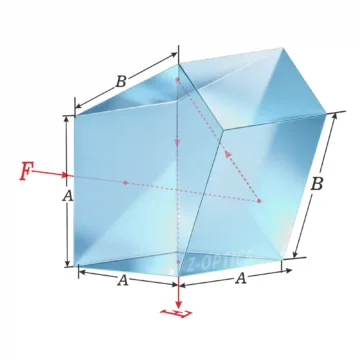
  • A Penta Prism is a five-sided reflective prism used to scatter a light beam by 90 °. The beam reflects twice inside the prism, allowing an image to be transmitted through a right angle without inverting it (i.e., without altering the handiness of the image) as an ordinary right-angle prism would. For optimum performance in the ultraviolet (UV), visible, or infrared (IR) spectrums, z-optics provides a selection of Penta Prisms. In addition, we provide half Penta prism. Without flipping or reversing the image, it is used to shift the line of sight by 45°. It is frequently used in telescopes and also has uses in geodesy, microscope tubes, projection and image systems, and Penta prism, half-Penta prism, and precision prism are all products that we manufacture in China. Please get in touch with us directly for pricing information or details on prisms that might work for your application.
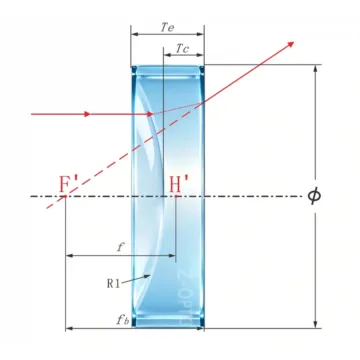
  • Plano-Concave Lenses are spherical negative lenses with one concave surface and one smooth surface. These lenses bend parallel light rays to the opposite side of the lens and thus have a negative focal length. Such lenses can be used to diverge light or to increase an optical system's focal length.
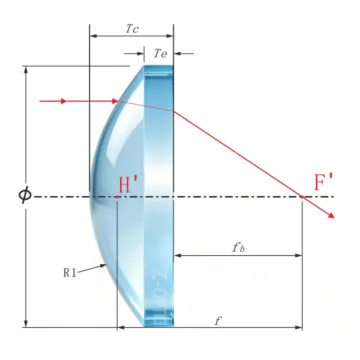
  • A plano-convex lens is a convergent lens having one convex and one flat surface. These lenses are intended for use in infinite conjugate (parallel light) applications or for basic imaging in non-critical applications. Plano-convex lenses are designed for infinite conjugate use or easy imaging in non-critical applications. They are positive focal length elements with a flat and spherical surface. A lens can be convex, concave, or flat depending on its surface.

    A convex lens has an outward bulge, whereas a concave lens has an inward bend. They are employed in non-critical applications for limitless conjugate (parallel light) utilisation or simple imaging. Their primary application is in focusing elements, although they can also be used for simple imaging techniques. Plano-Convex lenses are suited for photography's all-purpose infinite conjugate lens applications. Plano-convex lenses are ideal for focusing parallel light rays to a single point.

    These lenses' asymmetry reduces spherical aberration in applications where the object and image are at uneven distances. The N-BK7 lenses are ideal for most general-purpose visible and near-infrared applications. UV Fused Silica lenses are suited for ultraviolet (UV) or high-energy applications. When an object passes through the focal point, the image transforms into a virtual image and appears enlarged on the same side of the lens as the thing. These lenses are suitable for a wide range of applications, including industrial, robotics, pharmaceuticals, defence, and laser cutting.These lenses' asymmetry reduces spherical aberration in applications where the object and image are at uneven distances. The N-BK7 lenses are ideal for most general-purpose visible and near-infrared applications. UV Fused Silica lenses are suited for ultraviolet (UV) or high-energy applications. When an object passes through the focal point, the image transforms into a virtual image and appears enlarged on the same side of the lens as the thing. These lenses are suitable for a wide range of applications, including industrial, robotics, pharmaceuticals, defence, and laser cutting.

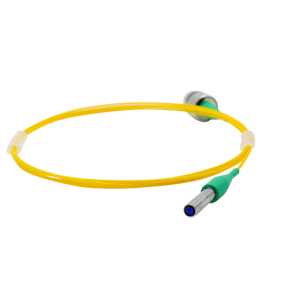
  • Polarization-Maintaining Pigtailed  fiber collimators can ensure the linear polarization direction remains unchanged by using polarization-maintaining fiber. It improves the signal-to-noise ratio in interferometric measurement.
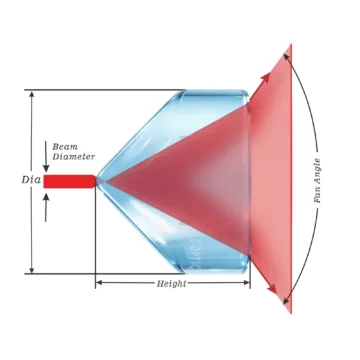
  • Powell Lenses narrow are specially engineered optical components that excel in transforming laser beams into a uniform, straight-line intensity distribution. These lenses are meticulously crafted to overcome the limitations of traditional beam-shaping technologies, offering a breakthrough in laser beam homogenization. They deliver an exceptionally uniform beam profile, eliminating hotspots and irregularities for enhanced laser performance and efficiency. With a focus on efficiency, Powell Lenses minimize energy loss, maximizing output power for cost-effective solutions.
    From industrial manufacturing to medical imaging, Powell Lenses adapt to diverse applications, empowering industries to achieve new heights. At Z-Optics, we provide customized  Powell Lenses, offering different aperture sizes, focal lengths, and beam-shaping profiles to meet your unique needs.
    • Generates a uniform laser line
    • Fan angle from 1° up to 90°
    • One dimensional Line straightness
    • Customized lenses, diameter, and height can be manufactured upon request of the customer
  • Reflective Achromatic Fiber Collimators uses a 90⁰ off-axis ellipsoidal mirror to couple free space laser beam into fiber or vice versa. Focal length of reflective mirror is irrelevant with wavelength. That makes it an idea solution to achromatic aberration. Al, Ag and Au is optional to be deposited as reflective film.
    • Aluminum averages greater than 90% reflectance from 200nm to the far infrared, except in the 750 – 900nm region where it averages around 85% reflectance.
    • Silver coatings can offer better performance in the visible and NIR from 450nm to 2μm.
    • For IR performance gold coatings offer high reflectivity of around 97% from 700nm up to 10μm.
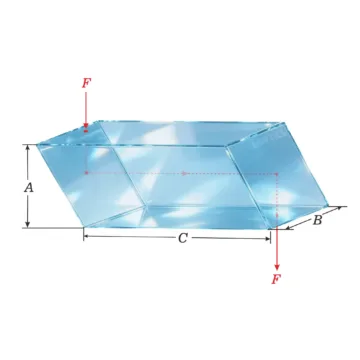
  • The Rhomboid Prism is a parallelogram with uneven length neighbouring sides and non-right angled angles. Rhomboid prisms are frequently used to dispense a laser beam while maintaining its direction. Rhomboid prisms will shift the optical axis in imaging applications without inverting the picture. They have high tolerance angles, which ensure that the output beam is parallel to the input beam within 30 arcseconds. Features - 1. Lateral Beam Displacement. 2. Parallel Input and Output Beams to 30 Arcseconds. 3. Repositions the optical axis without inverting the image. 4. Exceptionally well-suited for severe displacement applications.
  • A roof prism is a transparent optical marvel that comprises a segment where two faces meet at an angle of 90°, resembling the roof of a house and inspiring the name of this exceptional feature. This unique design allows the reflection of the two 90° faces to return an image that is laterally flipped around the axis where the faces meet, ensuring top-notch image inversion and precise orientation adjustments.
    At Z-Optics, we understand the importance of delivering exceptional optical solutions that cater to the needs of our customers. Experience the difference that Z-Optics Roof Prism makes – a world of clarity, precision, and portability awaits you. Elevate your optical experience with Z-Optics With its sleek and compact design, Z-Optics Roof Prism is the perfect solution for those seeking high-quality optics. Our Roof Prism designed to enhance the performance of binoculars, spotting scopes, and cameras. Our Roof Prism is engineered for resilience and accuracy, with the prisms cemented together as a single unit, ensuring ruggedness and resistance to misalignment. This guarantees long-lasting performance and consistent image quality, no matter the environmental conditions or challenges you may encounter during your expeditions. Roof Prism applications
    1. Binoculars: Roof prisms are commonly used in binoculars, providing a compact and straight-barrel design.
    2. Spotting Scopes: Roof prisms are utilized in some spotting scopes, offering portability and ease of use.
    3. Cameras: Roof prisms are used in compact digital cameras and camera lenses to maintain a slim form factor.
    4. Laser Range Finders: Roof prisms are employed in laser range finders for accurate distance measurements.
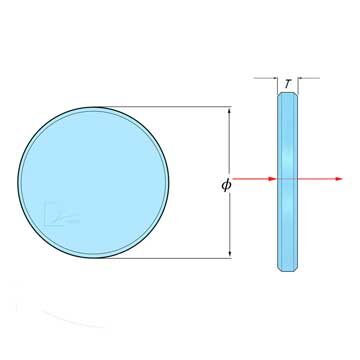
  • The mechanical properties of Sapphire include its great strength, thermal stability, wear resistance, and chemical inertness. As a result, a Sapphire Window outperforms other optical materials in severe conditions, acting as a shield between the elements. In optical and mechanical applications, sapphire windows are often used. Features
    • Chemical resistance due to its high surface hardness.
    • Transmits light at wavelengths ranging from ultraviolet to near-infrared.
    • Thinner and stronger than standard glass windows.
    • Available with anti-reflection coatings ranging from 400 to 5000nm
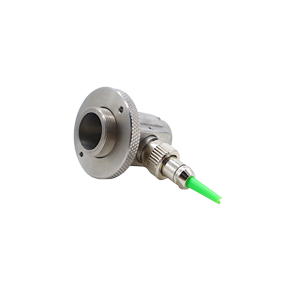
  • Short Work Distance Pigtailed Fiber Collimators can focus light into a very small spot(several microns to dozens of microns diameter), which is important for some applications like topography, ranging.
  • At Z-Optics, our SHORTPASS FILTERS are precision-engineered optical filters designed to transmit wavelengths shorter than a specified cut-off point while effectively blocking longer wavelengths. These filters provide excellent optical density (OD) and broad operational wavelength ranges, making them indispensable components in diverse optical and photonics systems requiring sharp spectral cutoff.

    Key Features

    • Precise Cut-Off Wavelengths: Available across a range of cut-off wavelengths from 395 nm up to 950 nm, tailored for diverse UV, Visible, and NIR applications.
    • High Optical Density (OD): Optical blocking strength of OD3 to OD5 ensures minimal transmission of unwanted wavelengths, enhancing signal clarity and contrast.
    • Broad Wavelength Operation: Supports extended wavelength ranges from 200 nm up to 1100 nm depending on the model, allowing flexible integration in various optical setups.
    • Standard Diameters: Available in 12.7 mm and 25.4 mm diameters, compatible with most optical mounts and instrumentation.
    • Durable Coatings: Advanced multilayer dielectric coatings offer long-term stability, high laser damage thresholds, and resistance to environmental factors.
    • Customizable Options: Filters can be customized for specific cut-off wavelengths, diameter sizes, and operational ranges to suit unique application needs.

    Applications

    • Spectroscopy systems requiring sharp wavelength cutoff for signal isolation.
    • Fluorescence microscopy and biomedical imaging to separate excitation and emission bands.
    • Laser safety and beam shaping in industrial and scientific laser systems.
    • Optical sensing and environmental monitoring devices where wavelength selection is critical.
    • Machine vision and quality control inspection systems operating under variable lighting.
    • Multispectral and hyperspectral imaging to enhance spectral discrimination.
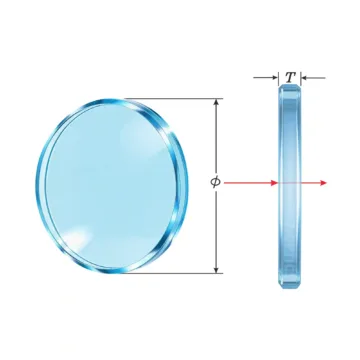
  • Silicon Windows are suitable for infrared applications due to their high transmittance between 1.2 and 7.0 μm. Silicon has a low density of 2.329 g/cm3, making it an excellent material for weight-sensitive applications. Features -
    • Transmission range of 1.2 - 7μm.
    • Available Uncoated or AR Coated for 3 - 5μm.
    • Ideal for applications requiring low weight.
Go to Top